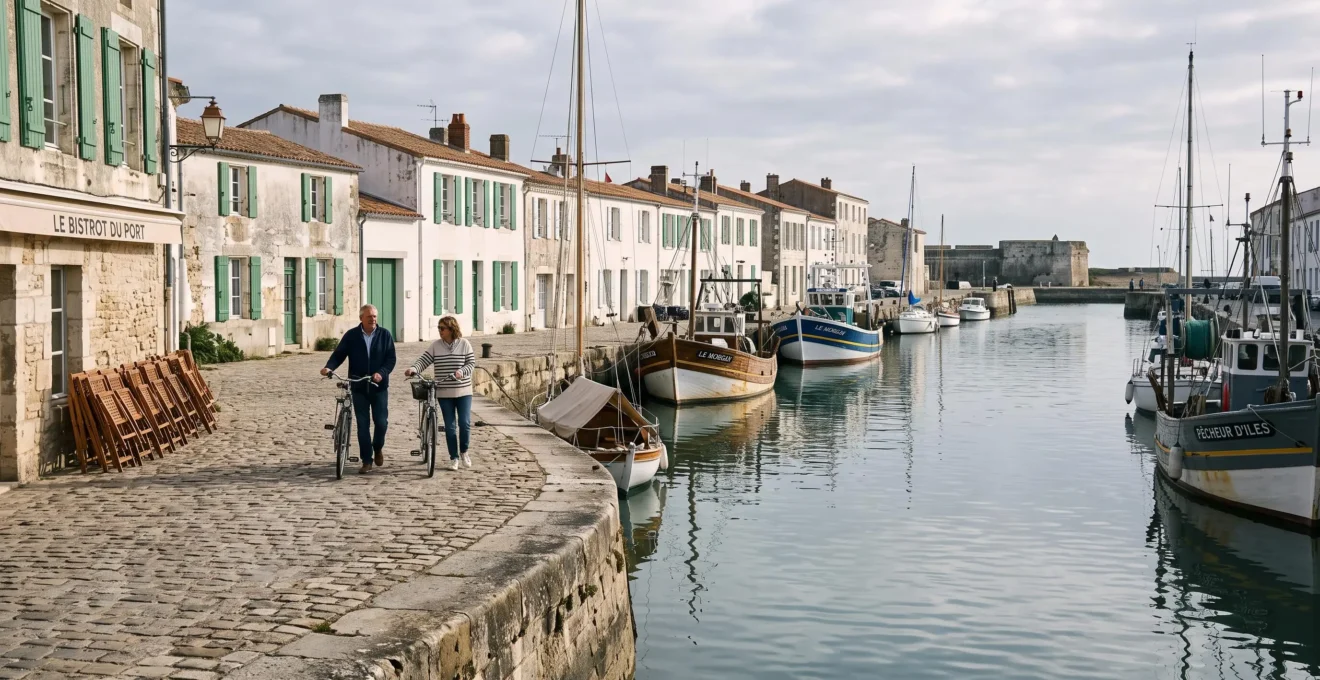
Yes, visiting Île de Ré outside the peak summer season can be genuinely worth it if your priority is to avoid crowds and keep your trip simple. The island remains enjoyable beyond July and August, but the experience changes: fewer people, a quieter rhythm, and sometimes a smaller choice of opening hours and services.
The key is choosing the right off-season window for your travel style—because a calm spring weekend does not feel the same as a winter stay. This guide helps you compare periods, see what you can still do, and plan with realistic checks (so you don’t arrive to closed doors).
Off-season on Île de Ré: what you really gain (and what to watch)
- Fewer crowds: a calmer, more “local” atmosphere in villages and on cycle paths.
- Lower fixed costs can be possible: but you must compare offers because availability is also lower.
- Many outdoor highlights still work: cycling and walking are often the easiest win.
- Main risk: shorter opening hours and seasonal closures—check before you go.
- Best approach: pick your dates based on your tolerance for cool weather and reduced services.
Why Visit Île de Ré Outside the Peak Summer Season?
Réponse directe : Visiting Île de Ré outside the peak summer season mainly means more space, less waiting, and a calmer “real island” feel—with the trade-off that you must plan around reduced opening hours and a smaller accommodation choice.
If you picture Île de Ré as busy beaches, traffic, and packed terraces, the off-season offers a different version of the island: more breathing room in villages, quieter cycle paths, and a pace closer to everyday local life.
The crowd difference is not just a feeling. According to Destination Île de Ré – Office de Tourisme, around 92% of visitors come between April and October, and only 8% of visitors between November and March. This seasonal split is detailed on their page about tourist numbers and off-peak travel advice on Île de Ré.
What changes concretely? Take a simple example: visiting a village and stopping at a market. In July or August, you may spend time circling for parking and navigating dense pedestrian streets. Off-season, you are more likely to stroll without rushing and to find a table without timing everything around peak lunch hours—provided you accept that some addresses may be closed on certain days.
Costs can also feel lighter outside summer, even if it’s hard to generalize without comparing listings. One fixed expense is well documented: the bridge toll. The Département de la Charente-Maritime indicates that the toll is 4€ in low season (15 November–1 March) versus 16€ in high season (15 June–15 September), paid only on the way in. See the official grid on Tarifs pont de Ré : Aller-retour – La Charente Maritime.
Does “off-season” mean everything is closed? Not necessarily. The Île de Ré tourist office explicitly mentions activities available all year, such as cycling and walking, and also cites the Phare des Baleines among options that can still be visited depending on schedules. The practical method is simple: treat opening hours as a variable, not an assumption.
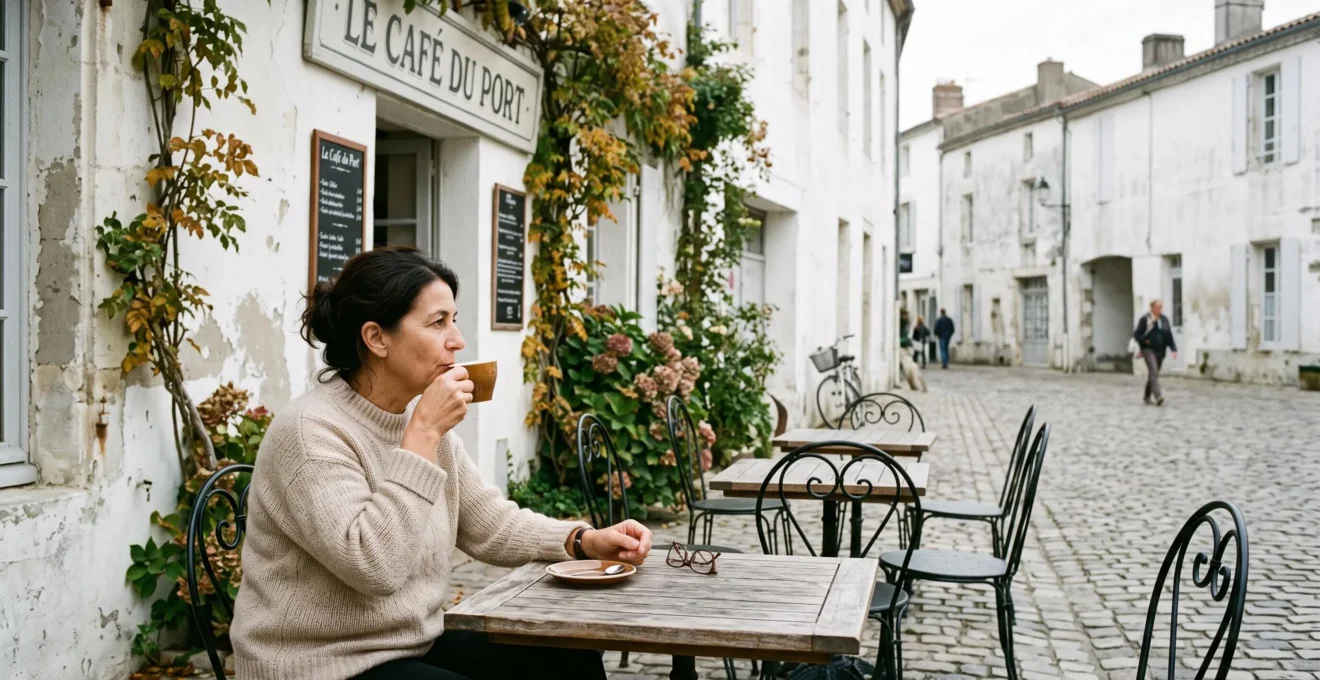
Reading the island well: outside summer, the “best” experiences tend to be the simple ones—riding between villages, walking in natural areas, trying local produce—rather than trying to replicate a full peak-season program day by day.
One last nuance: even “outside peak summer” can still be lively. Destination Île de Ré notes a trend where very high season (July–August) represents a smaller share over time, with other periods progressing. This idea is discussed in a regional economic article quoting the tourist office: Une saison 2025 plus solide, mais des disparités.
When Is the Best Off-Season Period to Go?
The best off-season period depends on what you fear most: crowds, cool weather, or reduced services. On Île de Ré, spring and early autumn often feel like the easiest compromise because you can target calm days while keeping a wide range of possibilities—yet you still need to verify opening days and hours.
Spring (outside peak summer): who is it best for?
Spring generally fits travelers who want calm days for cycling and village walks, without leaning into a “winter” atmosphere. It’s also a smart choice if your plan is mostly outdoors, with a few cultural stops as backups when the weather turns.
Limit to plan for: some businesses may still be on reduced schedules early in the season. A quick check of opening times for your “must-do” spots avoids disappointment.
Autumn: why can it feel more authentic?
Autumn can be ideal if you want a lived-in island vibe: fewer short-stay crowds, quieter cafés, and more room on the cycle network. It often suits a long weekend built around villages, local food, and simple landscapes rather than a packed timetable.
Limit to plan for: days shorten, and some activities become more dependent on weather and opening days. Keep your schedule flexible and plan a “plan B” visit for each day.
Winter: when does it make sense?
Winter makes sense if you are specifically seeking maximum quiet and you are comfortable with a slower pace and fewer open addresses. If your trip is about walking, taking photos, reading, and enjoying calm harbors and villages, the off-season feel can be a feature, not a drawback.
Limit to accept: the risk of closures is higher, and you should expect to plan meals and visits more intentionally (opening days, daylight hours, weather windows).
- You want calm, but still plenty of choices:
Choose spring or early autumn and build your days around cycling and village strolls, with a few indoor backups.
- You mainly want the lowest crowd levels:
Consider winter, but plan your stay around what is confirmed open (restaurants, rentals, key sights).
- You’re on a tight budget for access by car:
Check the bridge toll dates and target the low-season window (15 November–1 March) if it matches your travel style.
Cas pratique
Hypothetical example: you plan a quiet 3-day spring break. Day 1 focuses on one village and an easy cycle loop; Day 2 is “weather-flexible” (outdoor ride if it’s pleasant, cultural stop if it’s grey); Day 3 is a slow morning market/coffee plan. Before booking, you check opening hours for your top 3 places (a lighthouse visit, a market day, and one restaurant), so the calm trip stays calm.
What to See and Do on the Island Beyond Summer
Outside summer, the strongest program is usually the simplest: villages, nature, and slow travel. The good news is that many of the island’s signature experiences don’t require peak-season infrastructure—especially if you’re happy being outdoors.
Which landscapes and villages still deliver off-season?
Harbors, salt-marsh scenery, beaches for walking (not necessarily swimming), and the distinct architecture of island villages are accessible year-round. What changes is the atmosphere: less “holiday mode,” more everyday rhythm, which many travelers actually prefer when they want authenticity.
Can you still cycle and use the bike paths outside summer?
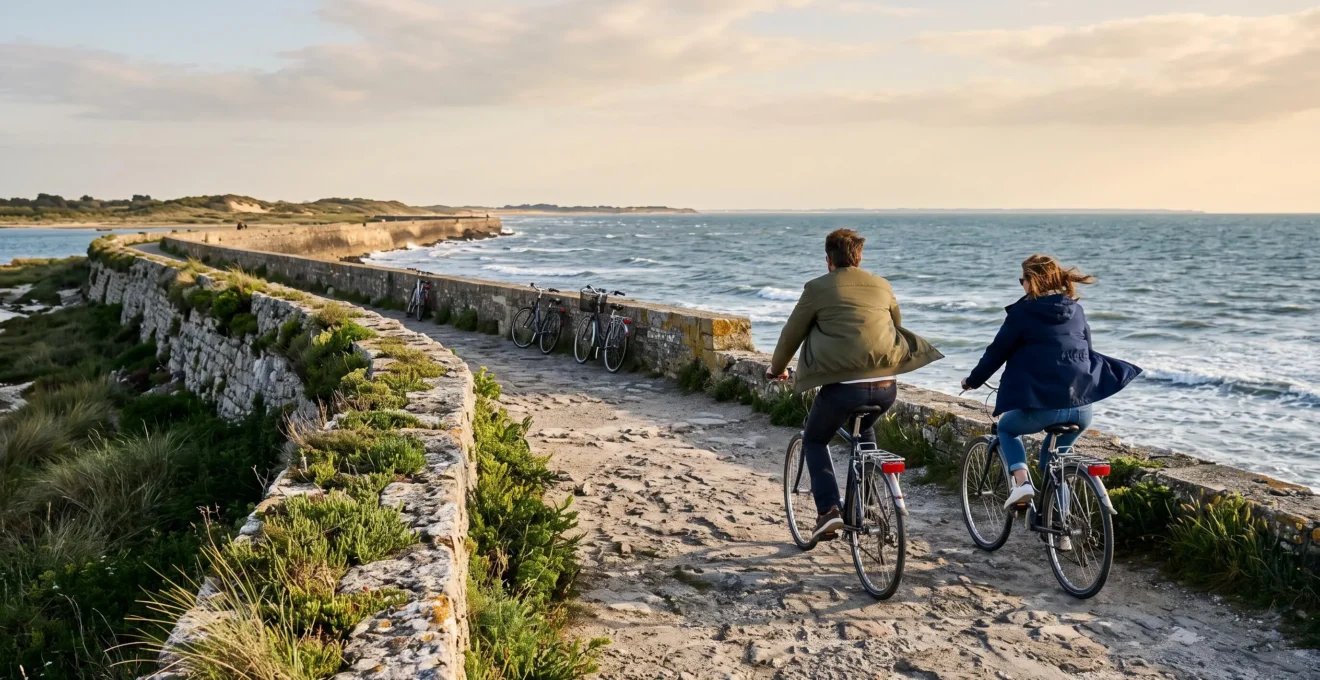
Yes—cycling is repeatedly presented by Destination Île de Ré as an activity available all year. Off-season, the experience is often about comfort and safety: you’ll appreciate quieter paths, but you should also be ready for wind, cooler mornings, and earlier sunsets depending on your dates.
- Pick one “base” village
Sleep in one area and ride out-and-back to avoid complex logistics when services are reduced.
- Build a short loop first
Start with a modest distance, then extend if conditions feel good (wind and daylight matter more off-season).
- Plan one warm stop
Choose one café or market as a checkpoint, and verify its opening day to avoid a closed terrace moment.
What cultural or local-food stops are worth targeting?
Beyond nature, off-season is a great time to prioritize low-friction local encounters: tastings, small producers, and visits that don’t rely on a “summer-only” program. Destination Île de Ré also cites birdwatching among off-season options, which works best when you approach it as a quiet observation activity rather than a guaranteed “spectacle.”
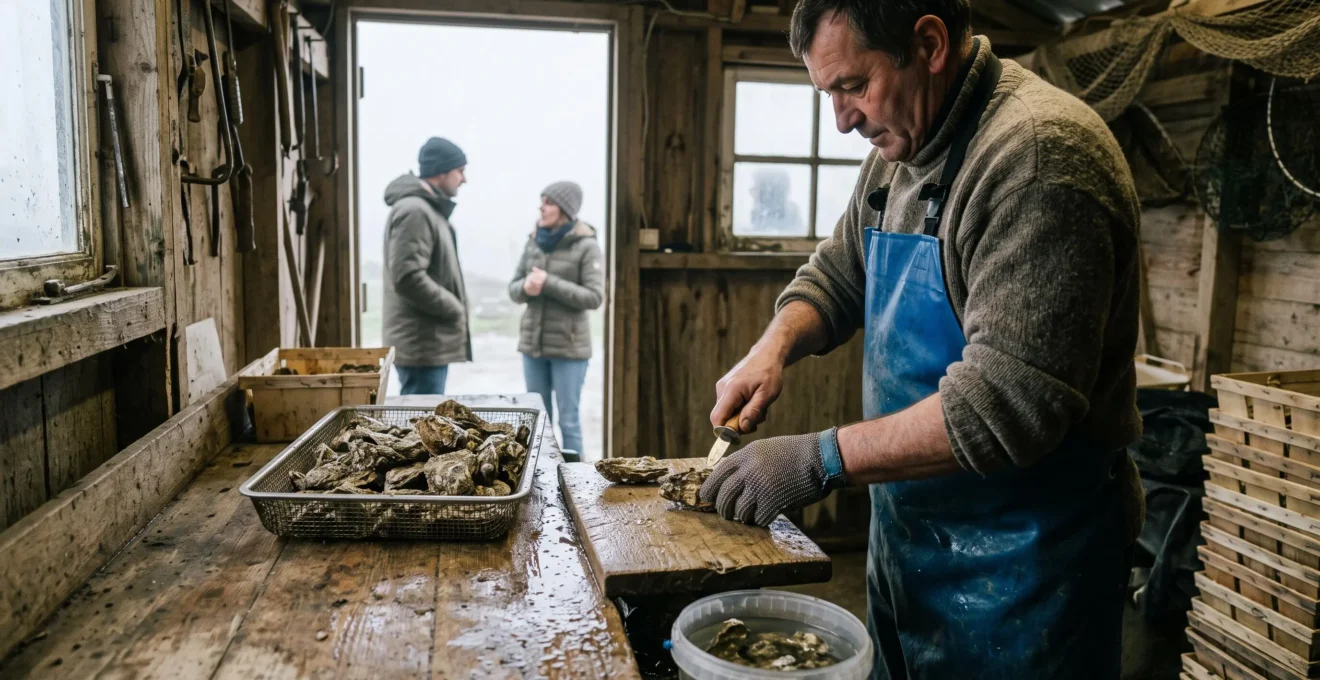
If your goal is to “discover the island differently,” focus on everyday places that stay meaningful without crowds: a quiet harbor walk at morning light, a producer stop, or a village café that feels like it belongs to locals, not only to holidaymakers.
And if part of your motivation is to avoid doing the exact same “top 10” route as everyone else, this approach aligns well with a broader travel habit: look for hidden gems by favoring daily-life moments over checklist sightseeing.
Practical Tips for Planning an Off-Season Stay
The practical challenge of visiting Île de Ré outside the peak summer season is not access—it’s predictability. Transport still works, the bridge still connects you, but opening days and on-site services become the variables that can make or break a “stress-free” stay.
How do you get to Île de Ré, and what changes off-season?
Most travelers arrive via La Rochelle area and cross the bridge by car, or combine train and local transport. Off-season, the most concrete change you can plan for is cost if you drive: the bridge toll varies by period (with a clearly lower price in the low-season window defined by the Département de la Charente-Maritime).
If you are comparing dates, it can be helpful to treat the toll as a fixed line in your budget, then focus your energy on what is harder to predict: accommodation availability and opening hours.
What should you verify before booking?
To avoid the “everything seems closed” feeling, pick your priorities first, then check them early. You don’t need a spreadsheet—just a short list of non-negotiables.
- Confirm your 2–3 must-do stops
Check opening days and hours (site, market day, or a specific restaurant you care about).
- Validate your daylight rhythm
Plan outdoor time earlier in the day and keep a flexible late-afternoon option.
- Secure your mobility
If cycling is central, confirm bike rental availability for your dates and arrival time.
- Keep one indoor fallback
Choose one visit that still works if the weather turns or wind rises.
What should you pack differently beyond summer?
Think in layers and plan for quick weather changes rather than “cold vs warm.” Off-season comfort is often about staying dry and windproof enough to keep enjoying the outdoors—because that’s where Île de Ré shines even when it’s quiet.
Off-season comfort trap : Don’t plan your days like a peak-summer beach schedule; build them around outdoor windows and verified opening times.
How to Turn Your Visit into a Memorable Escape?
A memorable off-season stay on Île de Ré usually comes from a simple formula: choose the right period, keep your plan light, and lock in just a few confirmed anchors (one place you really want to visit, one food stop, one bike or walking plan). That way, the calm you came for doesn’t turn into uncertainty once you arrive.
If you hesitate because you fear a “closed island,” use the decision grid from above: spring or early autumn for balance, winter for maximum quiet—while accepting that you’ll need to check opening days and adapt your rhythm. With that mindset, visiting Île de Ré outside the peak summer season becomes less about compromise and more about choosing the version of the island that matches you.
Est-ce que tout est fermé à l’île de Ré en basse saison ?
Non, mais il faut s’attendre à des horaires réduits et à des fermetures selon les jours ou les périodes. L’Office de Tourisme Destination Île de Ré indique que des activités comme le vélo et la randonnée restent possibles en basse saison ; l’important est de vérifier à l’avance les ouvertures de vos “incontournables”.
Quelle période choisir pour l’Île de Ré avec un petit budget et sans foule ?
Pour limiter la foule, l’hiver est le plus calme, mais il demande plus d’anticipation (ouvertures, météo). Côté dépenses fixes, si vous venez en voiture, le péage du pont est nettement moins cher en basse saison (dates et tarif officiels définis par le Département de la Charente-Maritime). Pour garder du confort tout en évitant l’affluence, beaucoup de voyageurs visent plutôt la mi-saison.
Quoi faire à l’île de Ré hors saison quand tout semble fermé ?
Le plus efficace est de basculer sur un programme “paysages + villages” : balades à pied, vélo sur les pistes cyclables, photos de ports et marais, et quelques pauses gourmandes quand c’est ouvert. Préparez 2 ou 3 options confirmées (un site, un marché, un restaurant) et laissez le reste flexible : c’est souvent ce qui rend le séjour agréable hors été.
L’Île de Ré est-elle agréable au printemps ou en automne pour un week-end ?
Oui, si votre week-end est centré sur des activités simples (vélo, marche, villages, produits locaux) plutôt que sur une “journée plage” type été. Pour éviter les mauvaises surprises, vérifiez simplement les ouvertures des lieux que vous ne voulez pas manquer, car les horaires peuvent changer selon la saison.
Once your dates are chosen, the easiest next step is to list three “anchors” (where you sleep, one key visit, one food stop), verify their opening times, and then keep the rest of your schedule intentionally light. That’s how you protect the calm you’re coming for—without over-planning.